
What is PPF and how does it work?

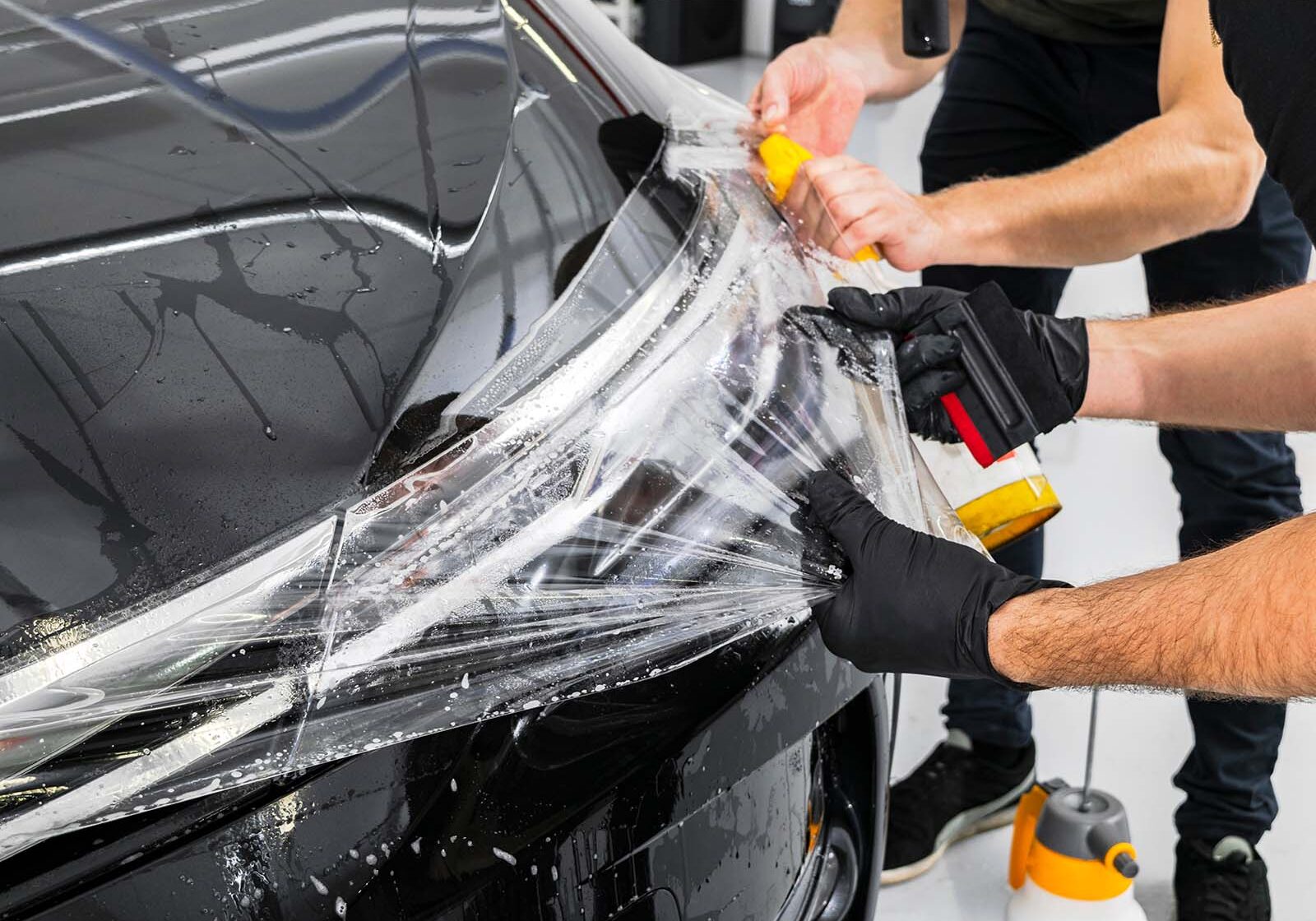
If you’ve ever worried about stone chips, scratches, or the long-term wear and tear on your car’s paint, then you’ve probably come across Paint Protection Film (PPF). Or maybe you haven’t, and we’ve just brought this problem to your attention. Take a closer look at your paint and you might be surprised by what you find. Yes, there is a way to prevent this wear and tear.
What is PPF?
PPF is a clear, polyurethane film that is applied to a vehicle’s exterior surfaces to protect the paint from damage. PPF is mostly used on automotive exteriors. It tends to be anywhere from 6-8 mils thick and is quite flexible. It acts as an invisible shield, preventing stone chips, road debris, bug splatter, and other environmental contaminants from making direct contact with your car’s paint. Thanks to advancements in technology, modern PPF is self-healing, meaning that minor damages to the film disappear with heat exposure – that can be from a heat gun, sun exposure, warm water, etc.
How does PPF work?
PPF is made up of three main layers, each playing a crucial role in performance:
- Topcoat – The topcoat determines the film’s resistance to environmental contaminants, hydrophobic properties, and self-healing abilities. Some topcoats are ceramic-infused for added benefits like greater durability, gloss, and hydrophobic properties.
- Adhesive layer – This is what bonds the film to the paint. A high-quality adhesive ensures a strong grip while allowing for repositioning during installation.
- Thermoplastic polyurethane (TPU) layer – This is the heart of PPF, which is the part that you can see. TPU is a flexible, durable material that absorbs impacts and resists scratches, stains, and UV damage.
What are the differences between paint protection films?
Not all PPF is created equal. The quality of each layer–adhesive, TPU, and topcoat–varies from brand to brand, impacting durability, clarity, and longevity. All films age differently. Some films may turn yellow over time, while others remain crystal clear for years. This is why it’s essential to know what film is being applied to your vehicle. If you’ve grazed a shopping cart or lightly backed into your garage door and need to replace a single panel of PPF, you want to ensure a seamless match.
One of the key advantages of choosing Ceramic Pro is transparency. With us, you know exactly which film is going on your vehicle and ensure consistency in quality and appearance. Warranties also differ from film to film. There are plenty of great films out there, just be sure to ask about what you’re receiving in the case you need to warranty the film.

How much does PPF cost? Do I have to protect my entire car?
PPF pricing depends on several factors, including coverage, size of the car, film quality, and installer expertise. A full-body PPF wrap can range from R45,000 – R65,000, while partial coverage options–such as a front-end package (bonnet, fenders, bumper, mirrors) – can cost between R10,000 – R25,000.
You don’t have to protect your entire vehicle with PPF. Many car owners may opt for high-impact areas, like the front bumper, bonnet, and side mirrors, where stone chips and road debris cause the most damage. Others prefer full coverage for peace of mind. Also protecting the rear luggage area on your back bumper. Loading and unloading groceries, furniture, luggage, and daily necessities can really scuff up that part of your bumper without you realising.
How is PPF different from a vinyl wrap?
PPF and vinyl wraps may seem similar, but they have different purposes:
- PPF is designed for protection – it’s usually clear, comes in gloss or matt finish, and is self-healing and impact-resistant.
- Vinyl wraps are for aesthetics – They come in various colours, textures, and finishes (gloss, matt, satin, etc.) but do not offer the same protective benefits as PPF.
If you’re looking to protect your paint, PPF is the best choice. If you want a cosmetic change, a vinyl wrap is the way to go.
Paint protection film is the ultimate defence for your car’s paint, shielding it from stone chips, scratches, and daily wear. Choosing the right film and installer makes all the difference in how well your PPF performs over time. There are a lot of high-quality films and talented installers out there for you to choose from. At Ceramic Pro you get all this plus transparency, a solid warranty, and a customer experience that we pride ourselves in.