
Ceramic Coating vs. PPF

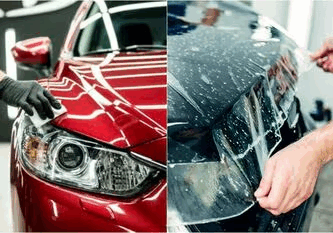
Ceramic coating vs. paint protection film
When it comes to maintaining the appearance of your car’s paint, choosing the right paint protection option is crucial. In a market that feels incredibly saturated, it is important to know what your paint protection options are to make an educated decision. Among the most popular choices are ceramic coating and paint protection film (PPF). In this article, we’ll dive into both options, discuss their respective pros and cons, and even explore the possibility of combining them for enhanced protection.

Ceramic coating: What Is It?
Definition: Ceramic coating is a cutting-edge protective layer for your car’s paint. It is a liquid polymer applied to the car’s exterior, most likely after a paint correction. It bonds with the automotive paint or clear coat to create a protective shield.
How it Works: Ceramic coatings chemically bond with the paint, creating a hydrophobic surface that repels water, dirt, and contaminants.
Benefits of ceramic coating:
- Enhanced gloss
- Protection against UV rays and oxidation
- Resistance to environmental contaminants
- Ease of cleaning
Limitations of ceramic coating:
- Not impact-resistant: Ceramic coatings are designed to make your paint more slippery and are not designed to protect it from stone chips and road debris like PPF would.
- Labour-intensive application: Applying ceramic coating correctly can be labour-intensive and requires careful preparation, detailing, and paint correction.

Paint protection film (PPF): What is it?
Paint Protection Film is a physical barrier designed to provide a high level of protection for your vehicle’s paint from abrasion and various types of damage. PPF is a transparent, thermoplastic urethane film that is applied directly to the car’s painted surfaces and headlights.
Advantages of PPF:
- Superior protection
- Self-healing properties
- Durability and longevity
- High-Impact Resistance
Drawbacks of PPF:
- More expensive: PPF can be significantly more expensive than ceramic coating.
- Complex installation: Applying PPF properly requires skill and precision, often necessitating professional installation.
